

✨ AU BODY CARE • 15 MIN READ ⏳
Vitamin C has earned its reputation as a skincare superstar. Known for its brightening, anti-aging, and protective properties, this powerful antioxidant is a must-have in any effective skincare routine. But if you’re new to vitamin C, you might be wondering: How do I apply it correctly? When should I use it? And what should I pair it with? This comprehensive guide will walk you through everything you need to know about how to apply vitamin C serum—from step-by-step instructions to layering tips and local considerations for Pakistani skin.
💊 What Is Vitamin C and Why Does Your Skin Need It?
Vitamin C (also called L-ascorbic acid in its purest form) is a water-soluble vitamin that acts as a potent antioxidant when applied topically. It’s naturally present in fruits and vegetables, but your skin can’t produce it on its own, which is why topical application is so beneficial.
What Vitamin C Serum Does for Your Skin
When applied correctly, vitamin C serum provides a range of benefits:
- Brightens dull, uneven skin tone – reduces the appearance of dark spots and hyperpigmentation
- Boosts collagen production – helping keep skin firm, plump, and youthful
- Protects against environmental damage – neutralizes free radicals caused by UV rays and pollution
- Reduces signs of premature aging – minimizes fine lines and wrinkles over time
- Regulates melanin production – helps lighten existing dark spots and prevents new ones
For people living in Pakistan, where sun exposure and pollution are daily challenges, vitamin C serum isn’t just a luxury—it’s a practical necessity for maintaining healthy, radiant skin.
⏰ When to Apply Vitamin C Serum – Morning vs. Night
The Short Answer: Morning Is Best
Most dermatologists and skincare experts agree that morning is the ideal time to apply vitamin C serum. Because oxidative stress from sunlight, blue light, and pollution peaks during daylight hours, applying vitamin C in the morning offers maximal photoprotective benefits by neutralizing free radicals before they can damage your skin cells.
When used in the morning, vitamin C also works synergistically with sunscreen to enhance UV protection. Some studies suggest that combining vitamin C with SPF provides significantly better protection against sun damage than sunscreen alone.
Can You Use It at Night Too?
Yes. While morning application protects, evening use restores. As you sleep, your skin enters its repair phase, and applying vitamin C at night helps boost collagen production, calm inflammation, and correct signs of daily stress. If your skin tolerates it well, you can apply vitamin C twice a day—once in the morning and once at night—for maximum benefits.
The “Vitamin C Morning vs. Night” Decision Guide
| Time | Primary Benefit | Best For |
|---|---|---|
| Morning only | Protection against UV/pollution, enhanced SPF | Beginners, sensitive skin, daily defense |
| Night only | Repair, collagen renewal, pigmentation fading | Those who can’t use it in the morning |
| Both AM + PM | Protection + repair, faster results | Tolerant skin, stubborn hyperpigmentation |
📝 How to Apply Vitamin C Serum: A Step-by-Step Guide
Step 1: Cleanse Your Skin
Start with a clean canvas. Use a gentle, pH-balanced cleanser to remove dirt, oil, and any impurities from your face. If you have oily skin or wear makeup, consider double cleansing—first with an oil-based cleanser, then with a water-based one.
Pro tip: Pat your skin dry with a clean towel, leaving it slightly damp (not wet) before moving to the next step.
Step 2: Tone (Optional)
If you use a toner, apply it after cleansing to help balance your skin’s pH and prep it for better product absorption. Choose an alcohol-free toner to avoid irritation.
Step 3: Apply Vitamin C Serum
This is the most important step. Dispense 2–3 drops (or 4–5 for face and neck combined) of vitamin C serum into your palm. Using your fingertips, gently pat or press the serum into your skin—avoid rubbing, as patting helps the product absorb more effectively without causing irritation. Focus on areas with dark spots, pigmentation, or uneven tone.
Pro tip: Apply vitamin C to slightly damp skin, as this can improve penetration and absorption without diluting the formula.
Step 4: Wait for Absorption
This is a critical step that many people skip. Allow the serum to absorb fully before applying your next product—typically 30 to 60 seconds for lightweight formulas, or 1–2 minutes for thicker formulations.
Your serum is fully absorbed when your skin feels:
- Smooth rather than slippery
- Lightly dry (not tight)
- No longer sticky or tacky
If you apply moisturizer too soon, it can dilute the serum or prevent it from sinking in properly.
Step 5: Moisturize
Follow with a lightweight moisturizer to hydrate your skin and “seal in” the active ingredients. This helps prevent transepidermal water loss and keeps your skin comfortable throughout the day.
Step 6: Apply Sunscreen (Morning Routine Only)
This is non-negotiable. If you’re applying vitamin C in the morning, always finish with a broad-spectrum sunscreen with SPF 30 or higher. Sunscreen is the final step in your morning routine and is absolutely essential because vitamin C can make your skin more sensitive to the sun. Together, vitamin C and sunscreen form your skin’s ultimate daily defense system.
🧴 What Order Should You Layer Vitamin C?
The golden rule of skincare layering is simple: apply products from thinnest to thickest consistency. Vitamin C serum should be applied after cleansing and toning, but before other serums, moisturizers, oils, and sunscreen.
Sample Layering Order for Morning Routine
| Step | Product | Wait Time |
|---|---|---|
| 1 | Gentle cleanser | — |
| 2 | Toner (optional) | Pat dry |
| 3 | Vitamin C serum | 30–60 seconds |
| 4 | Hyaluronic acid serum (optional) | 30 seconds |
| 5 | Moisturizer | 30 seconds |
| 6 | Sunscreen (SPF 30+) | — |
Important: If you use a facial oil, apply it after your moisturizer, as oils act as an occlusive barrier and can prevent water-based serums from penetrating if applied too early.
🔄 Can You Use Vitamin C with Other Active Ingredients?
Vitamin C is versatile, but not all ingredients play nicely together. Here’s what you need to know:
✅ Works Well With
| Ingredient | How They Work Together |
|---|---|
| Hyaluronic acid | Deepens hydration and plumps the skin |
| Ferulic acid | Stabilizes vitamin C and boosts antioxidant power |
| Vitamin E | Enhances photoprotection and antioxidant effects |
| Alpha arbutin | Doubles down on fading hyperpigmentation |
| Sunscreen | Essential partner for daytime protection |
⚠️ Use with Caution
| Ingredient | Guideline |
|---|---|
| Niacinamide | Some research suggests they can be used together if the formulas are compatible, but many experts recommend separating them or using at different times of the day to avoid potential interaction |
| AHAs/BHAs (exfoliating acids) | Avoid using in the same routine; use acids at night and vitamin C in the morning, or alternate evenings |
❌ Avoid Combining (Same Routine)
| Ingredient | Why? |
|---|---|
| Retinol (Vitamin A) | Using both simultaneously can cause significant irritation, especially for beginners. The “vitamin C in the morning, retinol at night” approach is widely recommended |
❓ How Often Should You Use Vitamin C Serum?
For Beginners
If you’ve never used vitamin C before:
- Start with once daily (morning) for the first 1–2 weeks
- Monitor how your skin responds—mild tingling is normal, but persistent stinging or redness means you should reduce frequency
- Once your skin builds tolerance, you can increase to twice daily (morning and night) if desired
For Experienced Users
Most skin types can use vitamin C serum daily without issues. If your skin is well-adapted, applying it both morning and night can accelerate results, particularly for hyperpigmentation and collagen support.
How Long Until You See Results?
- Improved brightness and texture: 2–4 weeks of consistent use
- Fading dark spots and pigmentation: 6–8 weeks (with daily use and proper SPF)
- Anti-aging benefits (fine lines, firmness): 8–12 weeks or longer
Important: Vitamin C serum doesn’t wash off—it stays active in your skin for up to 72 hours. This means even if you skip a day, the benefits continue to work at a reduced level.
🇵🇰 Why Vitamin C Serum Is Perfect for Pakistani Skin
Living in Pakistan means your skin faces unique challenges year-round:
- Year-round intense UV exposure – leads to hyperpigmentation, sunspots, and premature aging
- High pollution levels (especially in major cities like Lahore, Karachi, and Islamabad) – creates oxidative stress that damages skin cells
- Humid climate – causes excess oil production and clogged pores for many skin types
- Post-acne scarring – common concern that requires gentle but effective brightening
Vitamin C serum is uniquely suited to address these issues:
- For pigmentation caused by sun damage: Vitamin C inhibits melanin production, helping lighten existing dark spots and prevent new ones from forming. Studies confirm its role in treating hyperpigmentation and improving overall skin brightness.
- For oily skin in humid climates: Vitamin C helps regulate excess oil while providing hydration without clogging pores. The lightweight formula absorbs quickly, making it suitable for Pakistan’s humid weather.
- For pollution protection: As a potent antioxidant, vitamin C neutralizes free radicals from environmental aggressors, preventing them from damaging collagen or dulling your complexion.
- For all skin tones: Vitamin C is safe and effective for all skin tones and is particularly helpful for sun damage and uneven tone common in Pakistani skin due to year-round UV exposure.
⚠️ Potential Side Effects and How to Avoid Them
Vitamin C is generally safe and well-tolerated, but some people may experience mild irritation, especially when first starting out.
Possible Side Effects
- Mild tingling or stinging – normal during initial use, should subside within a few minutes
- Redness or warmth – may indicate sensitivity or using too high a concentration
- Dryness or flaking – more common with high-strength formulas (15%+)
How to Minimize Irritation
| Sensitivity Level | Recommended Approach |
|---|---|
| Normal/balanced skin | Start with 10–15% strength, once daily |
| Sensitive/reactive skin | Start with 5–10% strength, every other day |
| Very sensitive skin | Look for vitamin C derivatives (more stable, gentler) |
Who Should Avoid Vitamin C Serum?
- People with known allergies to vitamin C (rare but possible)
- Those with active eczema or rosacea flare-ups – consult a dermatologist before introducing
- If you experience persistent burning, swelling, or breakouts – discontinue use and consult a professional
Always patch test a new vitamin C serum on a small area of skin (like your inner forearm) before applying it to your face. If no irritation occurs after 24–48 hours, it’s likely safe to use.
🛒 Choosing the Right Vitamin C Serum – What to Look For
Not all vitamin C serums are created equal. Here’s what to consider when shopping for one:
1. Form of Vitamin C
| Form | Stability | Best For |
|---|---|---|
| L-ascorbic acid | Low (needs proper packaging) | Maximum potency, all skin types |
| 3-O-ethyl ascorbic acid | High | Sensitive skin, beginners |
| Sodium ascorbyl phosphate | Medium | Oily/acne-prone skin |
| Tetrahexyldecyl ascorbate | High | Sensitive skin, oil-based formulas |
2. Concentration
- 5–10%: Great for beginners and sensitive skin
- 10–15%: Ideal for hyperpigmentation, aging concerns, and oily skin
- 15–20%: Maximum strength, for experienced users only
3. Packaging
Vitamin C is notoriously unstable and can degrade when exposed to light and air. Look for serums packaged in:
- Dark or opaque glass bottles (amber, cobalt blue, or black)
- Airless pumps to minimize oxidation
- Avoid clear dropper bottles
4. Supporting Ingredients
The best vitamin C serums also include:
- Ferulic acid – stabilizes vitamin C and boosts antioxidant power
- Vitamin E – enhances photoprotection
- Hyaluronic acid – provides hydration
🛍️ Vitamin C Serums Available in Pakistan (Comparison)
| Product | Key Features | Best For |
|---|---|---|
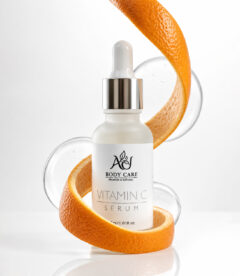
| AU Body Care Vitamin C + Ferulic Acid Serum | L-ascorbic acid + ferulic acid + hyaluronic acid; 15% concentration | Maximum brightening, pigmentation, all-around performance |
| BIOAQUA Vitamin C Serum | Lightweight formula; absorbs quickly without clogging pores | Pakistan’s humid climate, oily/combination skin |
| One Drop Vitamin C Serum | Controls excess oil, reduces dark spots | Oily skin, dark spot correction |
| QIARE C10 Vitamin C Serum | Combines vitamin C + alpha arbutin + ferulic acid | Stubborn hyperpigmentation |
| Dr. Rachel Vitamin C Serum | Popular local option | Beginners, budget-friendly |
✅ Why AU Body Care’s Vitamin C + Ferulic Acid Serum Stands Out
AU Body Care’s Vitamin C + Ferulic Acid Serum is specially formulated with the Pakistani climate and skin needs in mind:
- 15% L-ascorbic acid – clinically effective strength for visible brightening and collagen support
- Ferulic acid + vitamin E – stabilizes vitamin C and doubles antioxidant protection
- Hyaluronic acid – provides lightweight hydration without greasiness
- Dark glass airless pump packaging – ensures potency and prevents oxidation
- Formulated for Pakistani conditions – performs in high humidity and intense sun exposure
🙋 Frequently Asked Questions (FAQs)
Can I use vitamin C serum if I have oily skin?
Yes. Vitamin C helps regulate excess oil production and reduces the appearance of post-acne marks. Its lightweight formula absorbs quickly without clogging pores, making it ideal for Pakistan’s humid climate and oily skin types.
Can I use vitamin C with niacinamide?
You can use both, but to avoid any potential interaction, many experts recommend applying them at different times of the day (e.g., vitamin C in the morning, niacinamide at night). Some modern formulations combine them successfully, but separating them is a safe approach.
Does vitamin C serum expire?
Yes. Vitamin C serum typically stays potent for 3 to 6 months after opening if stored correctly. Signs of oxidation include the serum turning yellow, orange, or brown and developing an unpleasant smell. Once oxidized, it’s no longer effective.
How should I store my vitamin C serum?
Store it in a cool, dark place away from direct sunlight and heat. A bathroom cabinet is acceptable, but a bedroom drawer is even better. Never leave it on a sunny windowsill.
Can vitamin C cause breakouts?
Vitamin C itself is non-comedogenic (does not clog pores). However, some formulations contain ingredients that may trigger breakouts in sensitive individuals. If you experience breakouts, try switching to a different formula or lower concentration.
Is vitamin C safe during pregnancy?
Yes, topical vitamin C is generally considered safe during pregnancy and breastfeeding. However, always consult your healthcare provider before introducing new skincare products.
🧴 Final Verdict
Knowing how to apply vitamin C serum correctly is just as important as choosing the right product. When used properly—applied to clean, slightly damp skin in the morning, followed by moisturizer and SPF, and given adequate absorption time between layers—vitamin C serum becomes one of the most transformative tools in your skincare arsenal.
For those living in Pakistan, where intense sun exposure and pollution are daily realities, vitamin C serum isn’t just a nice-to-have—it’s an essential component of a protective, brightening, and anti-aging skincare routine. Whether you’re dealing with stubborn hyperpigmentation, uneven skin tone, or simply want to maintain a healthy glow, consistent use of a high-quality vitamin C serum will deliver visible results over time.
Ready to unlock brighter, more resilient skin? Explore AU Body Care’s Vitamin C + Ferulic Acid Serum and build a routine that works for you—not against you.
Disclaimer: This information is for educational purposes only and does not constitute medical advice. Always patch-test new skincare products and consult a dermatologist if you have specific concerns or persistent skin conditions.
Est tenetur molestiae sed voluptatem Quo nulla optio sequi sit dolorem laborum. Commodi sint minus occaecati est asperiores Non dolores. Id dolores et rerum Reprehenderit voluptatibus sed modi hic.
Eligendi culpa cum sit fficiis inventore nulla non maiores culpa optio ducimus est ullam at nisi ea. Consequatur et culpa accusamus ea. Incidunt velit dicta doloremque repellat quo magnam
Harum et libero debitis ea aspernatur vel est. Vel ab enim eveniet earum
In odit sunt sed. Maiores tempora ut ducimus accusantium. Aut voluptatibus et quidem quibusdam ea nisi